The Best Blood Pressure Monitor 2025
| PRICE | PROS | CONS | |
|---|---|---|---|
Omron BP5255 Upper Arm Blood Pressure Monitor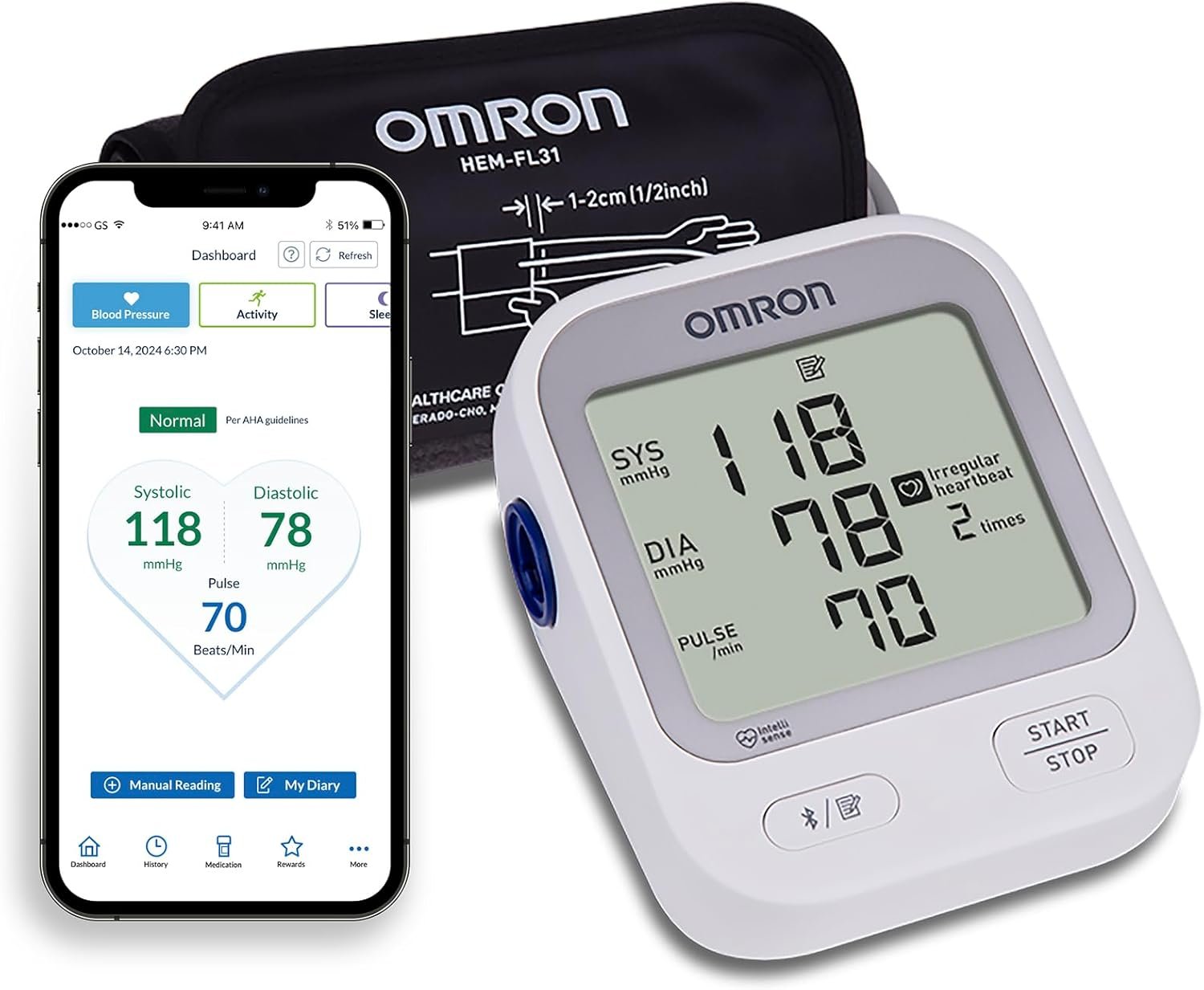 | $59.99 |
|
|
iHealth Track (KN‑550BT) Blood Pressure Monitor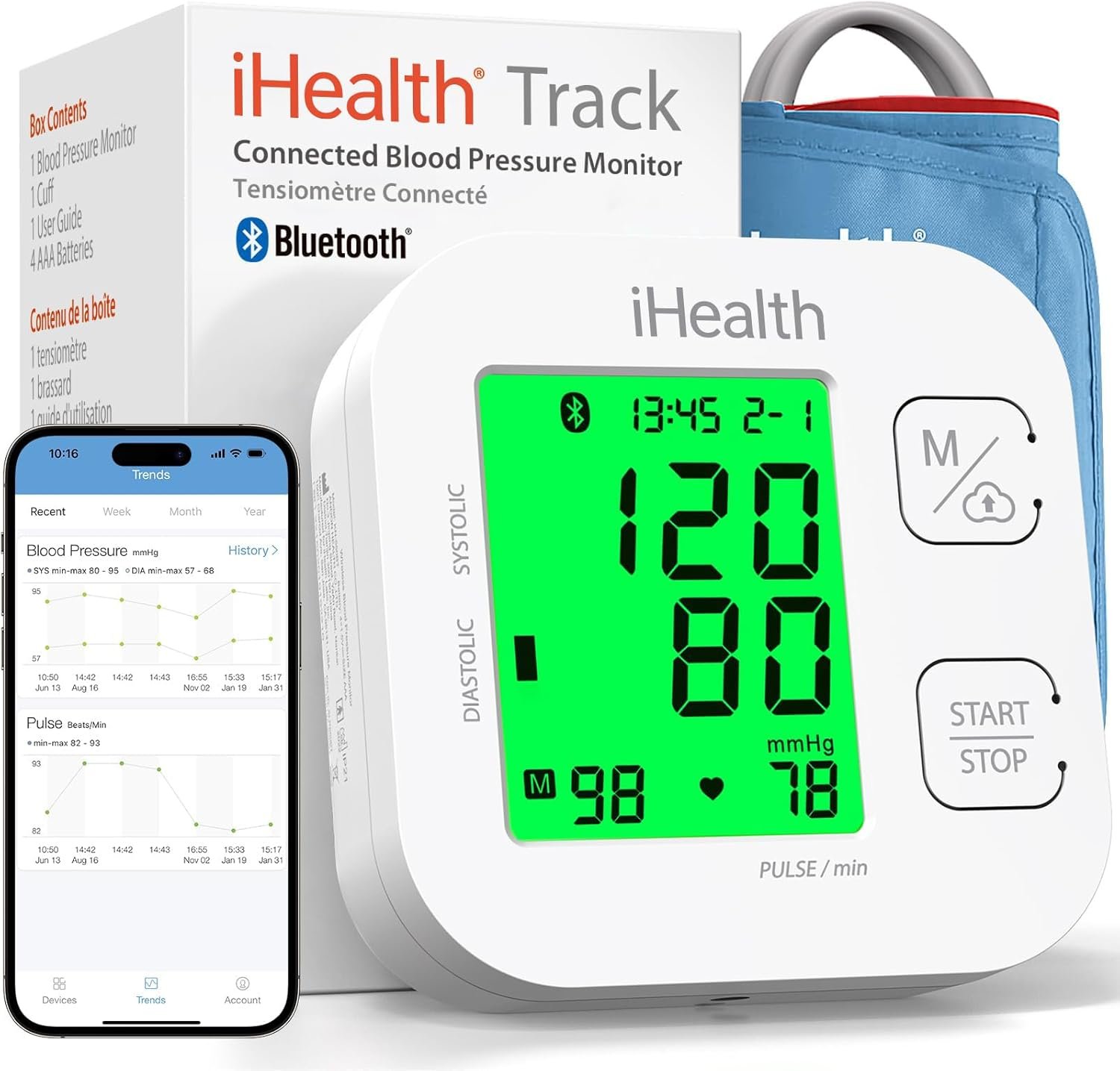 | $27.98 |
|
|
Medline Automatic Digital Blood Pressure Monitor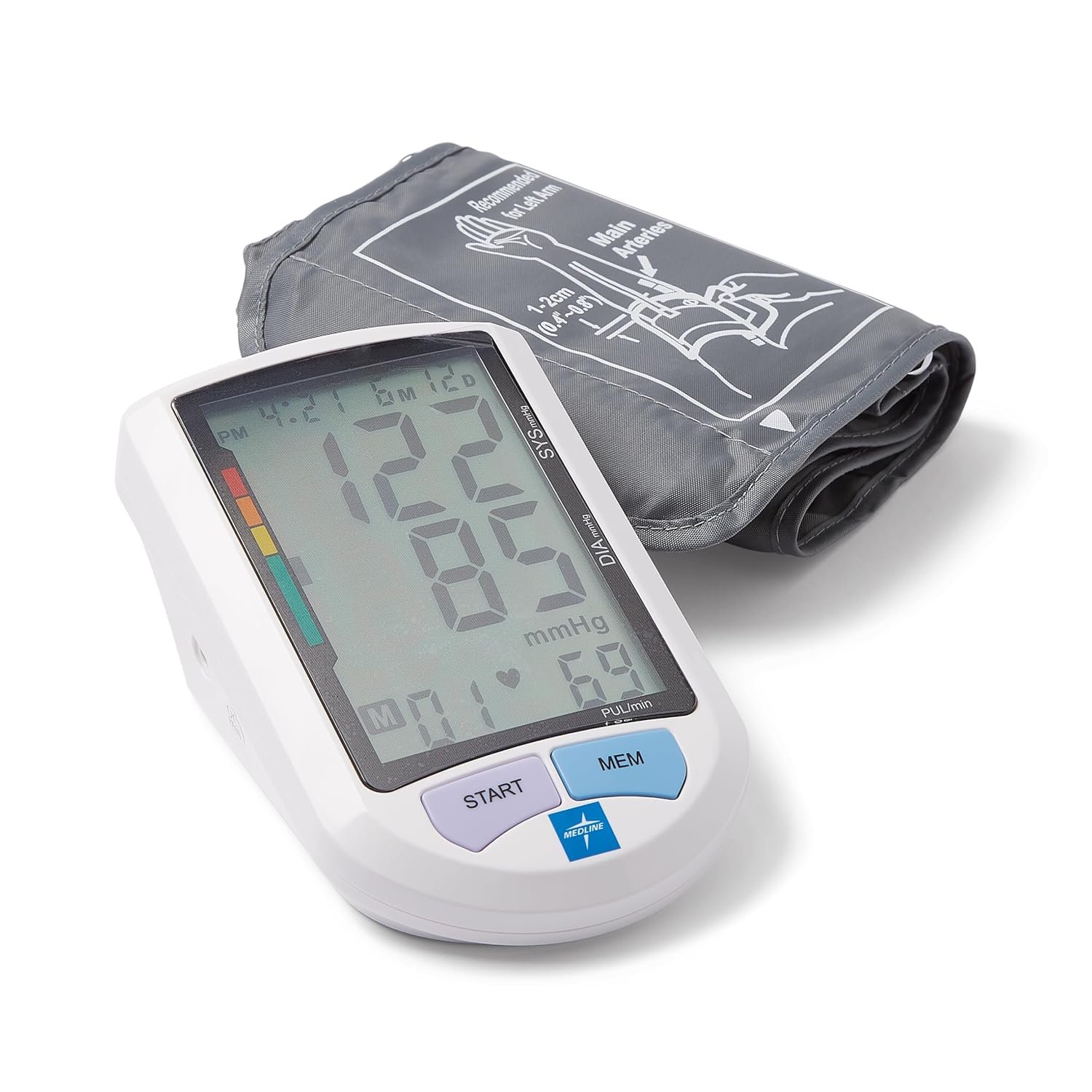 | $23.47 |
|
|
Dario Smart Blood Pressure Monitor Gen 2 (Model 1217‑05)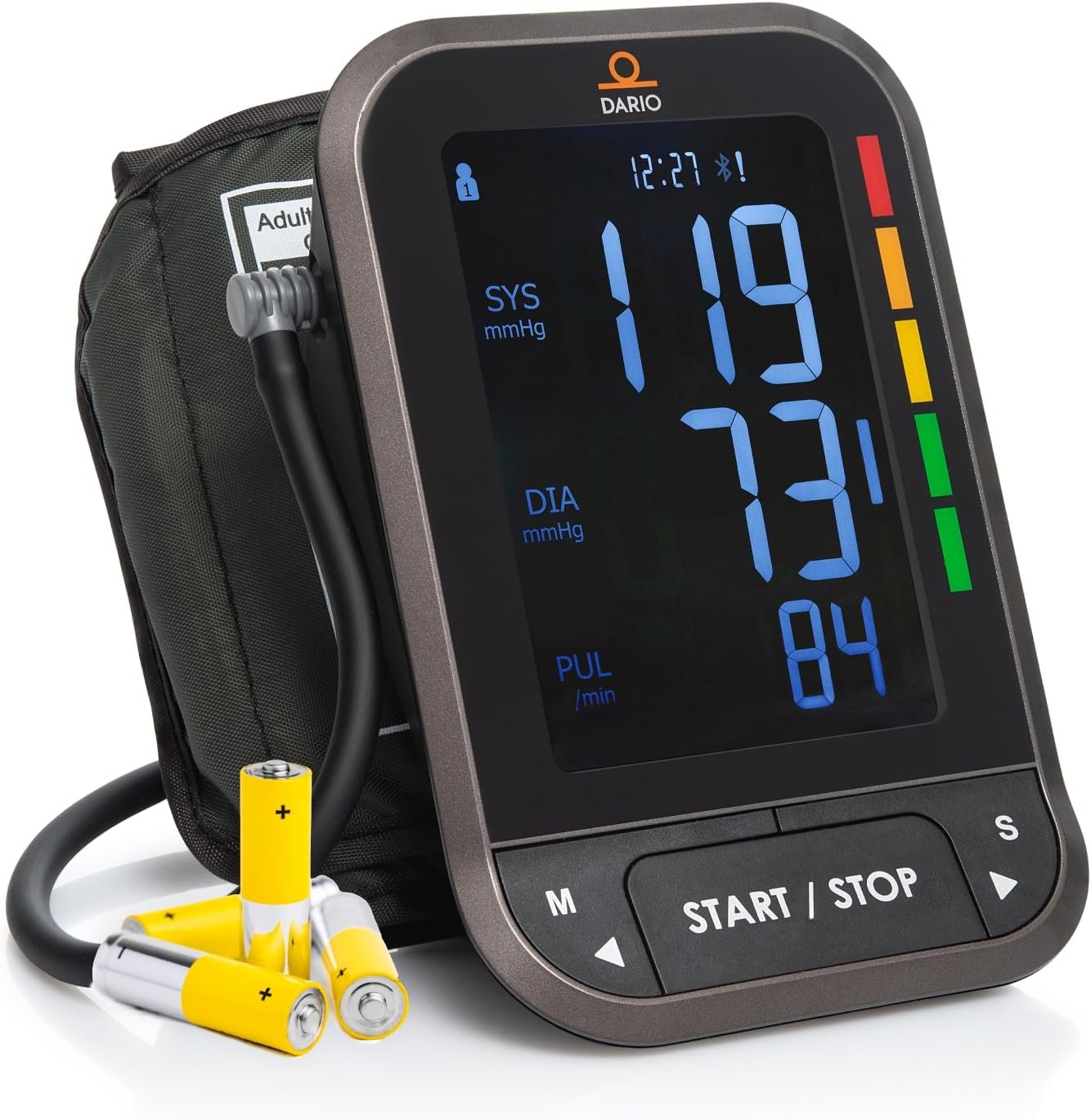 | $69.95 |
|
|
Oklar W1101L Wrist Blood Pressure Monitor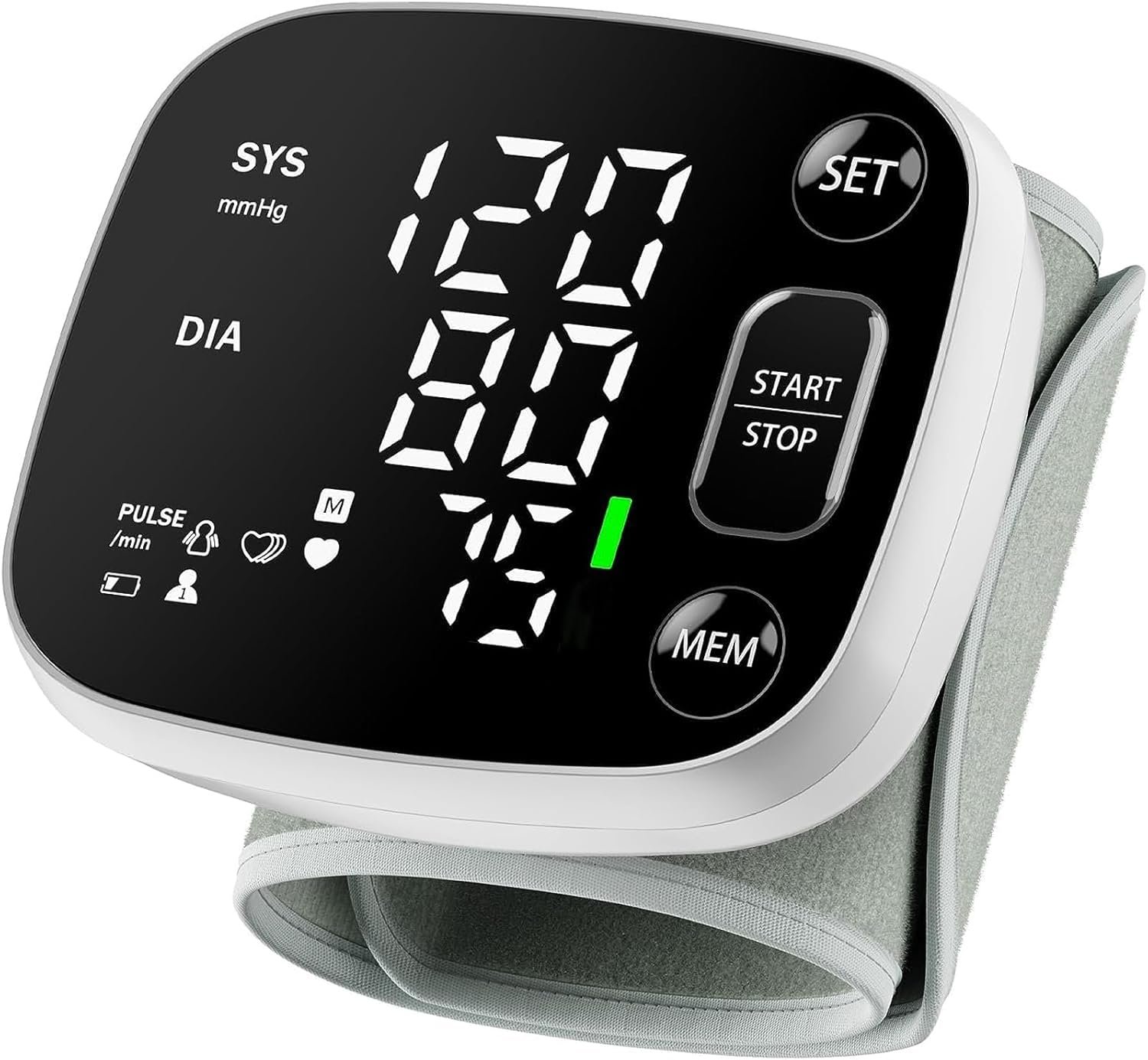 | $26.99 |
|
|
Omron BP5255 Upper Arm Blood Pressure Monitor
View in AmazonCharacteristics
- Clinically validated? Sources show no evidence found by some validation registers.
- Upper-arm cuff monitor from Omron (model BP5255, also listed as HEM-716BT2-ZAZ).
- Bluetooth connectivity: can sync to the Omron Connect app.
- Cuff size: Fits adult upper arms approx. 9″-17″ (22-42 cm) circumference.
- Features include: irregular heartbeat detection, movement detection, hypertension indicator.
- Storage: up to 30 readings in device (one user) + app unlimited.
PROS
- Strong brand reputation (Omron) and upper-arm measurement (which tends to be more accurate than wrist monitors).
- Bluetooth and app support make it suitable if you want to track trends digitally and share readings with a doctor.
- Good cuff size range (22-42 cm) covers many adult users.
- Extra features like irregular heartbeat detection and hypertension indicator give added value for monitoring.
CONS
- The fact that independent validation (Medaval) found no evidence of clinical validation for this exact model could be a concern for users seeking highest possible accuracy.
- Single-user memory (30 readings) is somewhat limited compared to multi-user models.
- Premium features and connectivity tend to increase cost; may be overkill for someone needing just basic BP checks.
iHealth Track (KN‑550BT) Blood Pressure Monitor
View in AmazonCharacteristics
- Validated: Listed as clinically validated (Medaval gives it a 3-star rating).
- Upper-arm Bluetooth-enabled monitor from iHealth (model KN-550BT) — fits arms 22-42 cm (8.7″-16.5″) and even has XL cuff options up to 48 cm.
- Performance specs: systolic 60-260 mmHg, diastolic 40-199 mmHg, pulse rate 40-180 bpm, accuracy ±3 mmHg for pressure ±5% for pulse.
- Colour-coded backlit display (green/yellow/red) per WHO recommendations for easy evaluation.
- Memory: 99 readings stored on device; unlimited when using app.
PROS
- Excellent connectivity + digital ecosystem: ideal for tracking health trends, sharing with physicians, managing data.
- Wide cuff size range (standard to XL) ensures fit for many users.
- Strong accuracy specs and colour-coded display make interpretation easier.
- Good value if you intend to use app/data features and monitor regularly.
CONS
- Might be more expensive than simpler monitors; if you only check occasionally, you may not utilise full features.
- Full functionality (app, Bluetooth) may require smartphone and some tech comfort; less tech-savvy users might find it slightly more complex.
- As upper-arm model, needs correct positioning; user must sit and position arm properly for reliable readings.
Medline Automatic Digital Blood Pressure Monitor
View in AmazonCharacteristics
- Simple, automatic digital arm monitor, large digital LCD display, one-push button, designed for home use.
- From brand Medline (a major home-health supplies brand). Model features include universal upper arm cuff 22-42 cm, stores up to 90 readings.
PROS
- Solid home monitor with basic but reliable features: good if you just need regular monitoring without high-tech extras.
- Good memory (90 readings) for tracking over time.
- Usually lower cost than high-end Bluetooth models, making it accessible.
CONS
- Lacks advanced connectivity (Bluetooth/app) in the versions described; if digital tracking with smartphone is important to you, this may not have it.
- Basic features may mean fewer bells-and-whistles (e.g., sharing data, multi-user profiles, trend graphs).
- Upper-arm monitor still requires proper positioning & technique; less “grab & go” than wrist monitors.
Dario Smart Blood Pressure Monitor Gen 2 (Model 1217‑05)
View in AmazonCharacteristics
- Displays AHA (American Heart Association) level classification on screen (normal, elevated, etc.).
- Smart upper-arm monitor (model 1217-05) by Dario / DarioHealth. Fits arm circumference 22-42 cm (8.75″-16.5″) as per manual.
- Includes Bluetooth/app connectivity to sync data. Manual shows use with Android/iOS.
PROS
- Smart-enabled: good if you like to integrate data into apps, track trends, share with doctor.
- Fit for many adult users (standard cuff size).
- Useful extra: classification indicator gives immediate context (not just numbers).
CONS
- Appears that “User 2” cannot transmit results to app (manual note) which may limit multi-user utility.
- Might cost more than purely “manual” or simple monitors; smart features may be unnecessary for occasional use.
- As with all upper-arm monitors, correct cuff placement is essential for accuracy — user training may still be needed.
Oklar W1101L Wrist Blood Pressure Monitor
View in AmazonCharacteristics
- Accuracy claim: ±3 mmHg for pressure, ±5% for pulse in some specs.
- Wrist type automatic blood pressure monitor from brand Oklar, model W1101L. Features: dual user mode (2 users), 120 memories per user (240 total) or more in some specs.
- Wrist cuff size range: 12.5-21.5 cm (4.9″-8.5″) wrist circumference.
- Features include: rechargeable battery (USB-C), large LED backlit display, voice broadcast (announces reading) — helpful for visually impaired.
PROS
- Wrist model: more portable and convenient for travel or for users who prefer not to use upper-arm cuff.
- Dual-user memory and large memory capacity (120+ per user) is strong for households.
- Voice broadcast and backlit display improve usability for older adults or users with limited vision.
- Rechargeable design means no frequent battery replacements.
CONS
- Wrist monitors typically less accurate than upper-arm monitors if positioning is not perfect (wrist must be at heart level and user still). This general rule applies though not always specified in product docs.
- Cuff size limited to smaller wrist sizes — may not fit larger wrists comfortably.
- Some users may still prefer upper-arm monitors for clinical accuracy or doctor-recommended devices.
- Some of the advanced features (voice, USB-C, dual user) may increase cost; if you only need basic readings you may not utilise them.