Home pulse oximeters: SpO2, limits, and oxygen logs
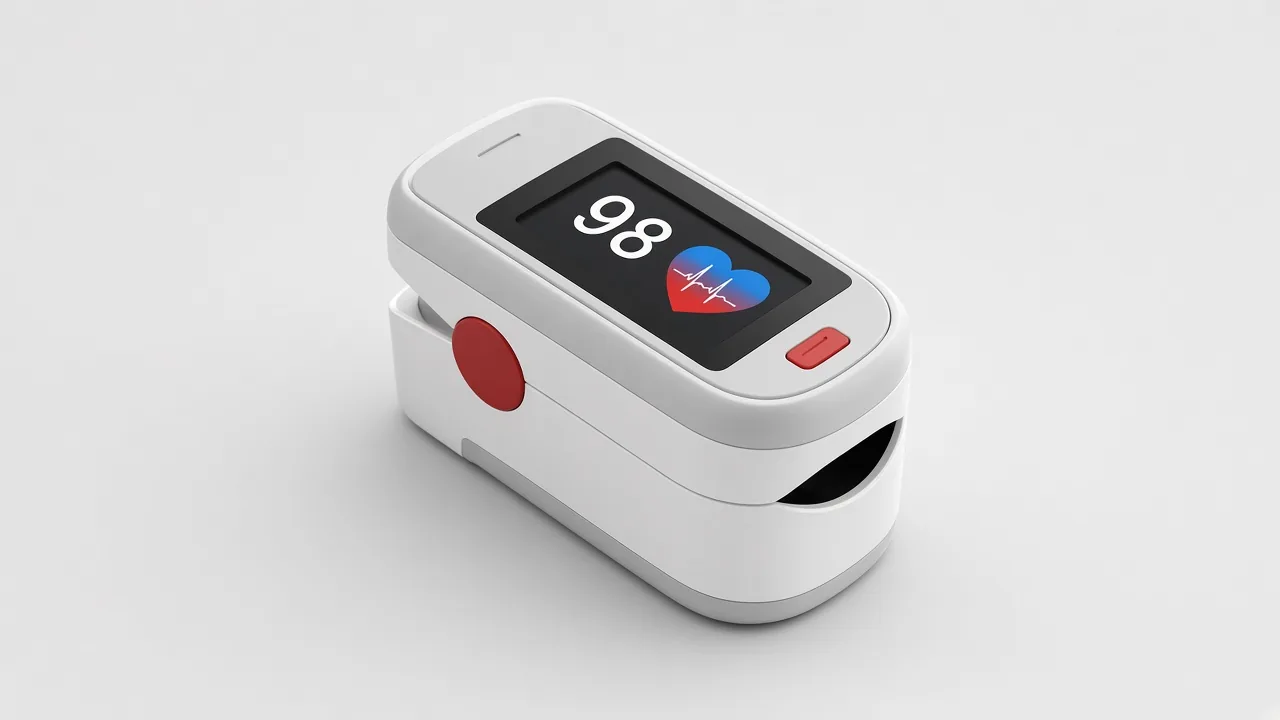
A fingertip pulse oximeter estimates SpO2 (oxygen saturation of hemoglobin, by pulse oximetry) and pulse rate. This page is about what the clip can do, where it fails, and how to choose one. It is not a toy review, and it is not a blood gas laboratory.
The clip always shows a number. A useful log waits until that number stops jumping, then stores SpO2 and pulse. The placement guide is short because the mistakes are short: cold fingers, dark nail polish, motion, a probe half-off.
What the gadget can and cannot do
Pulse oximetry is a screening-style optical signal used in clinics and, during respiratory illness, at home. It does not measure arterial blood gases. It can misread with dark nail polish, cold fingers, poor perfusion, motion, and — as regulators and WHO pulse-oximetry materials have discussed — some skin tones. A “normal” number does not cancel shortness of breath. A low number is a reason to contact a clinician, not to recalibrate the plastic clip ten times.
Carbon monoxide and some dyes can also confuse certain devices. Another reason this is not a blood test.
Choosing a clip
- A display you can read in one glance (SpO2 and pulse together).
- A spring that actually seats the fingertip. Unmarked toys are not a bargain if you need a log a clinician might look at.
- Medical-device marking appropriate for your country, not a party light with a percentage.
- Bluetooth only if you want the manufacturer’s extra app. Copying the two numbers by hand is enough for a home log.
Typical values — with a hard caveat
Many healthy people at sea level sit around 95–100%. Clinical concern often increases as values drop, commonly discussed around the low 90s. Altitude, chronic lung disease, and heart disease change what “usual” means for you. The threshold that matters is the one a clinician set, not a colour zone on a consumer gadget.
Red flags
Trouble breathing, chest pain, blue lips, or confusion: urgent care. Do not negotiate with a consumer clip. A falling series in the app is extra context, not a reason to delay.
Sources
WHO pulse oximetry training materials; FDA communications on pulse oximeter limitations across skin pigmentation and perfusion; manufacturer placement instructions.
Frequently asked questions
What SpO2 is typical at home?
Many healthy people at sea level sit around 95–100%. Clinical concern often increases as values drop, commonly discussed around the low 90s — but your clinician’s threshold is the one that matters, especially with lung or heart disease.
Can I walk around while measuring SpO2?
Motion wrecks the signal. Sit still until SpO2 and pulse stop jumping.
Does a normal SpO2 mean I am fine?
No. A “normal” number does not cancel shortness of breath, chest pain, or confusion. Pulse oximetry is a screening-style signal, not arterial blood gas and not a diagnosis.
Do pulse oximeters work equally on all skin tones?
Not always. Regulators and WHO materials have described accuracy limits with darker skin pigmentation, poor perfusion, and other conditions. Treat a worrying symptom as a reason to contact a clinician even if the clip looks reassuring.
Do I need Bluetooth on a pulse oximeter?
Only if you want the extra manufacturer app. Pulse Oximeter Tracker is enough for a manual SpO2 and pulse log.