How to use a pulse oximeter at home
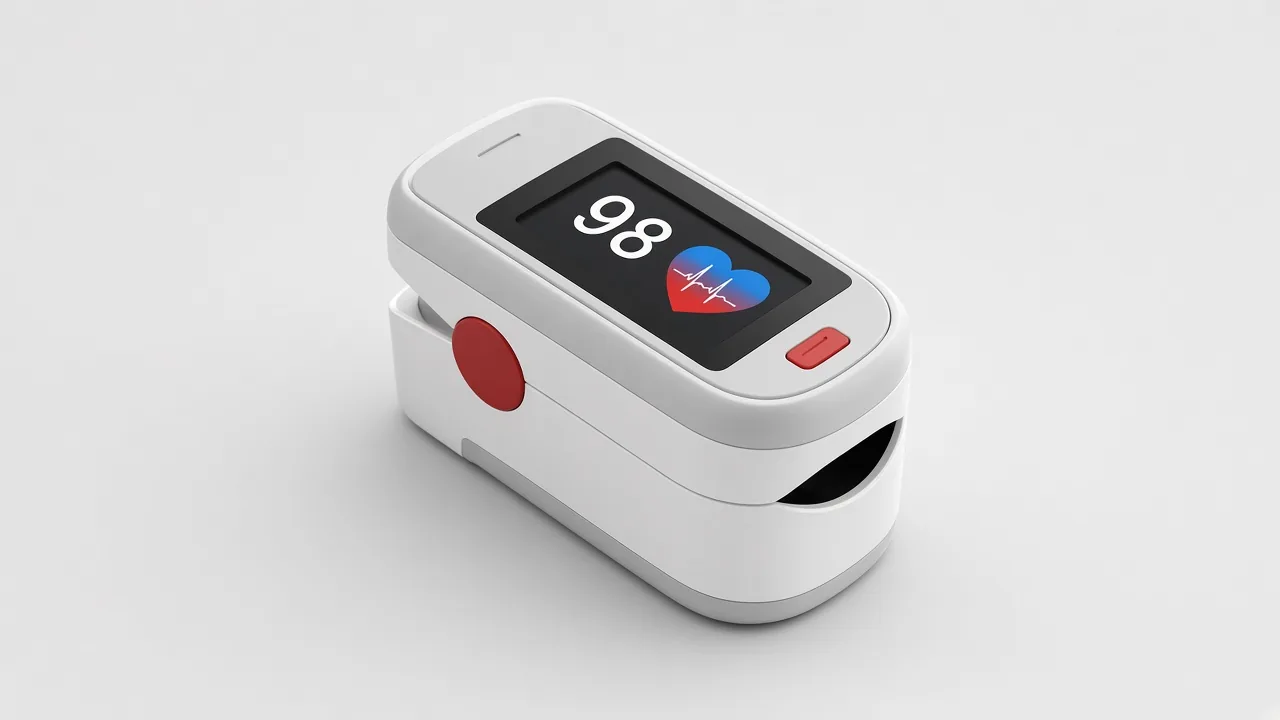
A pulse oximeter is easy to misuse because it always shows a number. Wait for a stable pair of values before you write anything down. If you are short of breath, the clip is not the decision-maker.
Steps
- Sit. Warm your hands. Remove dark nail polish or a long acrylic on the chosen finger if you can.
- Place the clip so the fingertip reaches the end of the probe. Index or middle finger is typical.
- Keep the hand still, roughly at heart level. Do not walk, talk through a panting conversation, or bounce the probe.
- Wait until SpO2 and pulse stop jumping. That may take 15–30 seconds or more.
- Read both numbers. Save them in Pulse Oximeter Tracker.
When the number is lying
- Poor pulse wave (cold, low blood pressure, fidgeting).
- Bright light on some sensors, or a clip half-off.
- Dark nail polish, dirt, or a finger that is too small for the spring.
- Known optical limitations with some skin pigmentation and poor perfusion — treat symptoms first.
If you have trouble breathing, chest pain, blue lips, or confusion, seek urgent care. Do not negotiate with a consumer clip.
How often to log
Only as often as the plan you were given. Hourly “just in case” checks mostly add noise. If you were asked to record twice a day during an illness, do that, sitting still each time, and bring the series — not a single screenshot — to the clinician.
Sources
WHO and manufacturer placement instructions; public-health and regulator notes on pulse oximeter error. Your clinician’s SpO2 threshold is the one that matters.
Frequently asked questions
Which finger should I use for a pulse oximeter?
Index or middle finger is typical. Use the same finger when you compare days, unless perfusion is bad — then try another warm finger without dark nail polish.
How long should I wait before logging SpO2?
Until both SpO2 and pulse stabilize. That is often 15–30 seconds or more. A number that is still jumping is not a reading worth saving.
Should I log SpO2 every hour?
Only if that is the plan you were given. Random obsessive checks create noise and anxiety without a better series.
Why is the pulse on the clip different from my watch?
Different sensors, motion, and poor contact all disagree. For this log, sit still and use the clip’s pair of values once they are stable.
When is a low SpO2 an emergency?
Trouble breathing, chest pain, blue lips, or confusion is urgent care — not a debate with a consumer clip. Follow emergency services, not the app.