Home thermometers: sites, fever, and temperature logs
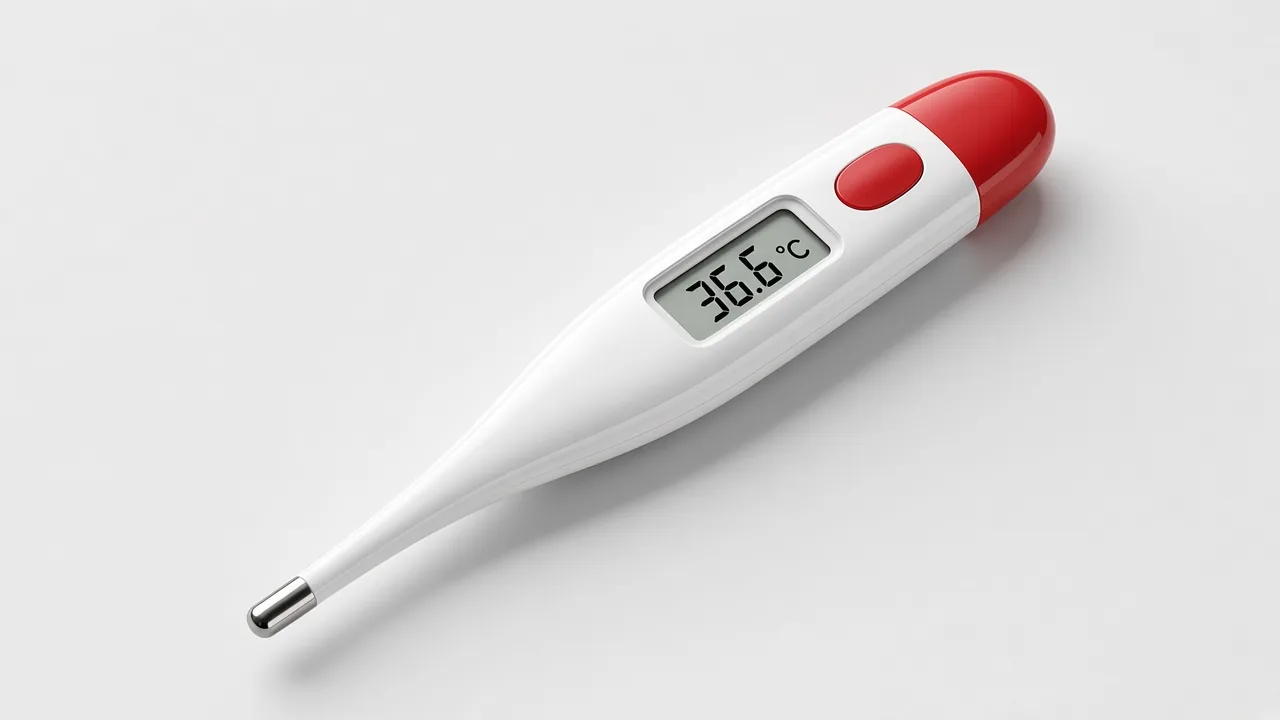
A home thermometer is only useful if you pick one site and keep it. Mixing an ear reading from Monday with a no-touch reading from Tuesday is not a fever curve. It is two different measurements sharing a graph.
The technique guide uses a digital oral example; the same rule applies to ear, axillary, and forehead devices: learn the manual, then do not switch mid-illness without noting it.
Sites compared
- Oral — common in adults who can keep the mouth closed. Wait after hot or cold drinks.
- Axillary (armpit) — easier with children; often a bit lower than oral.
- Tympanic (ear) — fast; technique and wax matter.
- Temporal / no-touch infrared — convenient; distance, sweat, and room temperature change the reading.
- Rectal — still used in infants in clinical settings. Follow pediatric advice, not a blog, if that is the plan.
Fever cutoffs
Public-health materials, including CDC fever guidance, often treat 38.0 °C / 100.4 °F as fever. Normal temperature still varies by person, time of day, and site. Interpretation belongs to a clinician, especially in infants.
Celsius or Fahrenheit
Match the thermometer and the log. Do not convert in your head in the night. A mixed series of 37.2 and 99.0 is not a trend; it is two scales.
Avoid mercury
Do not use glass mercury thermometers. Use a digital or infrared device meant for body temperature — not a kitchen probe.
Red flags
Very young infants with fever need prompt clinical contact. Stiff neck, unusual rash, extreme lethargy, or breathing difficulty are urgent, whatever the last number in the app said.
Sources
CDC fever definitions for the public; device manuals for site-specific offsets. Follow local pediatric services if their advice differs.
Frequently asked questions
Should I use Celsius or Fahrenheit?
Match the thermometer and Body Temperature Tracker. Do not convert in your head at 3 a.m. Switching the app unit later will scramble a mixed series.
Are mercury thermometers OK?
Avoid glass mercury. Use a digital or infrared device meant for body temperature.
Which thermometer is most accurate?
The most accurate home series is the one you can repeat. Oral, axillary, ear, and no-touch devices are not interchangeable. Pick one site, learn the manual, and keep it.
Is 38.0 °C / 100.4 °F always a fever?
Public-health materials, including CDC fever guidance, often treat 38.0 °C / 100.4 °F as fever. Normal temperature still varies by person, time of day, and site. Interpretation — especially in infants — belongs to a clinician.
Can I mix ear and forehead readings in one chart?
You can type any number, but it will not be a trend. Different sites are different measurements. Stay on one method.