Home blood pressure monitors: how to choose and log readings
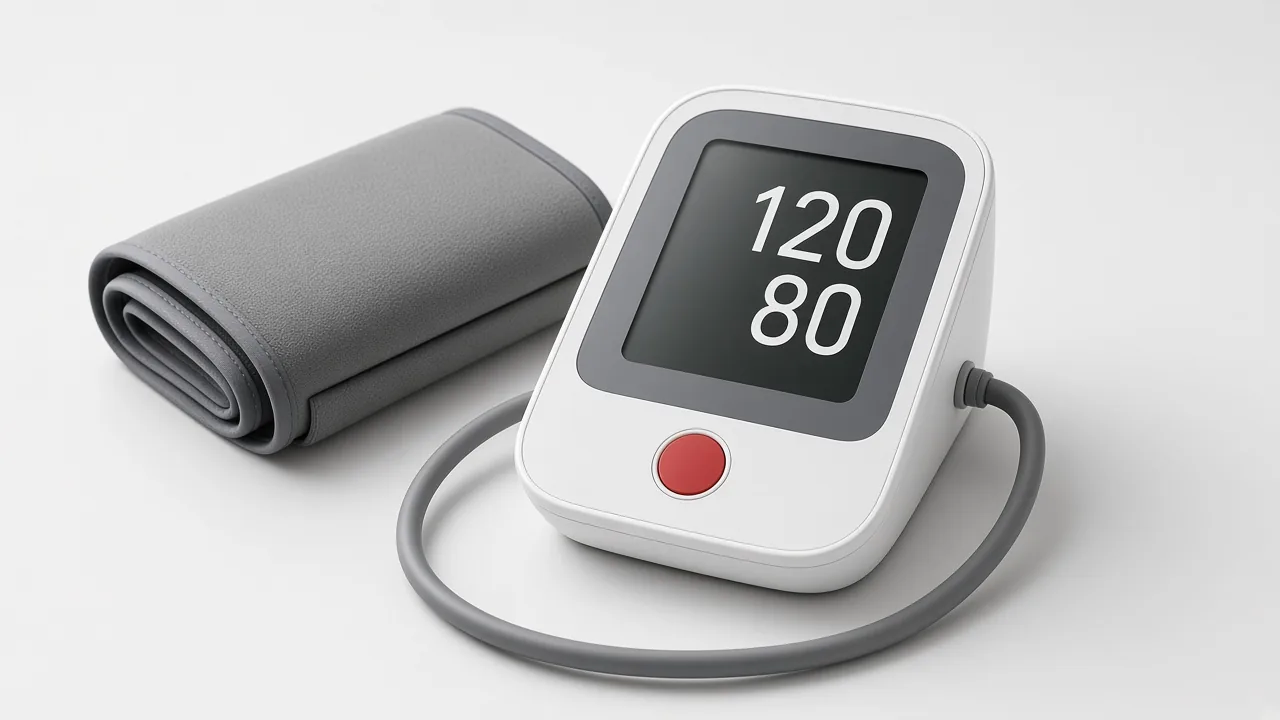
A home blood pressure monitor is useful when you need a series of readings — not a single snapshot in a noisy clinic. This page is about choosing a cuff and using it in a repeatable way. It is not a store inventory, not a ranking of brands, and not a diagnosis.
Technique moves the numbers more than a small price gap between two similar upper-arm cuffs. Read the home measurement guide before you compare listings.
What a home monitor actually measures
An automatic cuff estimates arterial pressure in millimetres of mercury (mmHg) and, on most models, pulse in beats per minute:
- Systolic — the higher number, while the heart ejects.
- Diastolic — the lower number, while the heart fills.
- Pulse — beats per minute, if the screen shows it.
That is not a cardiac ultrasound and it is not a 24-hour ambulatory recording. It is a repeatable home signal you can bring to a clinician. American Heart Association materials on measuring blood pressure at home assume rest, a correctly sized cuff on a bare upper arm, heart level, and no talking. If your clinician asked for home monitoring, follow their schedule first.
Why a series beats one clinic reading
A single office value can be higher because you hurried, talked, or sat badly (white-coat effect). It can also miss high readings that only appear at home (masked hypertension). Neither label is something to self-assign from a blog. The practical point is simpler: a week of honest morning and evening pairs is easier to discuss than one number remembered from a waiting room.
Home readings are often a little lower than clinic readings. Public adult category tables (including the AHA bands in the guide) are widely published for office-style adult classification. They are not your personal target. European Society of Cardiology / European Society of Hypertension materials also treat home and office thresholds as related but not identical. Use the target you were given.
Upper-arm vs wrist
| Upper-arm cuff | Wrist monitor | |
|---|---|---|
| Artery | Brachial | Radial |
| Typical use | Default for home tracking | Travel, limited arm access |
| Main failure | Wrong cuff size, clothing, talking | Wrist below heart, fidgeting |
| When to pick it | Starting from zero, clinician asked for home BP | Only if you will follow the manual every time |
If a clinician asked you to monitor at home, ask which type they expect before you buy. Wrist devices are not “wrong,” they are less forgiving.
What actually matters on a device
- Cuff size. Measure mid-arm circumference and match the range printed on the cuff. A cuff that is too small typically inflates readings. Many “standard adult” cuffs cover about 22–42 cm — read the label, do not assume.
- Validation. Prefer models listed on independent registries such as STRIDE BP or Medaval rather than star ratings alone. Validation is about that model, not a stock photo of a cuff.
- A screen you can read. You will copy three numbers. Tiny grey digits on a glossy panel are a daily tax.
- Memory vs app. Device memory is a backup. If you want trends, reminders, and a history you control, log in the app after each measurement. Bluetooth is optional.
- Two-user households. Only useful if each person can keep a separate series. Do not mix profiles on the device or in the app.
Use one arm, similar times of day, and the same device. If you measured because you felt dizzy or started a new tablet, a short note next to the reading is more useful later than a naked number.
When home monitoring is commonly used — and when it is not
Home logs are often requested after a high clinic reading, when medication changes, or when a clinician wants a week of context. They are not a licence to skip care, and they are not a reason to chase a “perfect” number five times until you like it.
Pregnancy, children, and some vascular conditions need the protocol you were given, not a generic adult table. If nobody asked you to monitor, buying a cuff still does not create a diagnosis.
Red flags
Chest pain, weakness, trouble speaking, or severe shortness of breath — with or without a dramatic reading — is urgent care. Do not wait for a prettier chart in the app.
How this site uses Amazon
We do not warehouse monitors and we do not ship parcels. If you need hardware, the buy button opens Amazon. Price, stock, and delivery are Amazon’s. Read the measurement guide before you spend time comparing similar upper-arm models: technique still moves the number more than a small price gap.
Sources
American Heart Association guidance on measuring blood pressure at home; ESC/ESH materials on office versus out-of-office measurement; independent cuff-validation registries (STRIDE BP, Medaval). Always follow the leaflet that comes with your specific model and the plan from your clinician.
Frequently asked questions
Do I need a Bluetooth blood pressure monitor?
Only if you want the manufacturer’s own app. Blood Pressure Tracker is built for manual entry of the systolic, diastolic, and pulse values on the screen. A readable display and a correctly sized cuff matter more than a radio chip.
Can a home monitor replace clinic visits?
No. A home series complements clinical care. It does not replace a diagnosis, a prescription, or urgent assessment. Bring the log to the appointment; do not treat the chart as a discharge from care.
Is a wrist blood pressure monitor accurate?
Wrist monitors can be acceptable when used exactly as the manual describes — wrist at heart level, still, after rest. They are easier to get wrong than an upper-arm cuff. If you are starting from zero, an upper-arm cuff is the simpler path.
How often should I measure blood pressure at home?
Follow the plan you were given. A common pattern before an appointment is two readings, morning and evening, for several days — not random checks whenever you feel anxious, unless that is the plan.
Which arm should I use?
Use the arm your clinician specified. If nobody specified one, pick one arm and keep it for the series so the numbers are comparable.
What cuff size do I need?
Measure mid-arm circumference and match the range printed on the cuff. A cuff that is too small typically inflates the reading. Many “standard adult” cuffs cover about 22–42 cm, but that is not universal — read the label.
How do I know if a monitor is validated?
Prefer models listed on independent validation resources such as STRIDE BP or Medaval, rather than marketing copy alone. Validation is about the model, not a random listing photo.