How to measure blood glucose at home
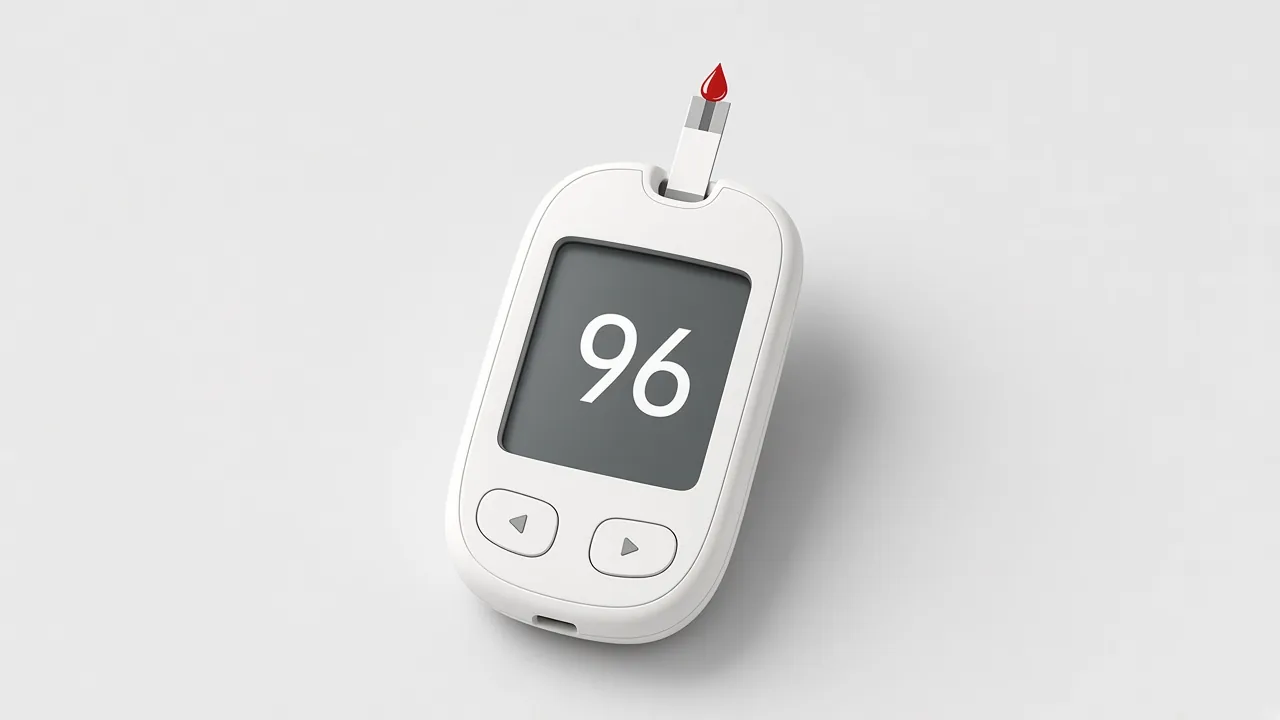
A glucose log is only as honest as the fingerstick. This guide covers a typical capillary meter. Always override these steps with the leaflet in your box. Label each number (fasting or after a meal) so a 140 mg/dL after lunch is not filed as if it were fasting.
Prepare
- Wash hands with soap and warm water. Dry them. Alcohol is a backup; let it evaporate completely or you dilute the drop.
- Check strip expiry and that the vial has been closed. Do not use bent strips or loose strips from an unmarked bag.
- Insert a new strip. Confirm the meter unit matches Blood Sugar Tracker (mg/dL or mmol/L).
- Use a new lancet. Depth that barely produces a hanging drop is enough; deeper is not “more accurate.”
Lance and sample
- Wash and dry hands.
- Prepare the meter and a new strip.
- Lance the side of a fingertip, not the centre of the pad.
- Apply a hanging drop to the strip window in one go, as the manual shows. Do not “milk” from the base of the finger — extra tissue fluid can dilute the sample.
- Wait for the meter. Read the value and the unit.
- Label fasting vs after-meal (and meal type if you use that) and save it in Blood Sugar Tracker.
Label the reading
Blood Sugar Tracker distinguishes before eating and after eating. That context is the point. If you were asked to check at a specific time (for example two hours after the first bite), write that consistently. A chart of unlabelled numbers is a pile of facts without a sentence.
What the number is not
One home value does not diagnose diabetes and does not tell you to change a prescription. Published example ranges in education leaflets are not your personal target. If you use insulin or a sulfonylurea, your clinician should have told you what to do with a low reading — follow that, not a website.
When two strips disagree
Unwashed fruit, a second squeezed drop, an expired vial, or a half-filled window are more common than a “broken” meter. Wash, new strip, repeat. Control solution exists for a reason: new vial, odd cluster of results, dropped meter. If the number still does not match how you feel, stop stacking strips and contact a clinician.
Sources
Meter ISO 15197 context; diabetes-education materials on capillary sampling. Conversion: 18 mg/dL ≈ 1 mmol/L. Follow the leaflet in the box and the plan from your diabetes team.
Frequently asked questions
Fingertip or alternate site?
Use an alternate site only if your meter and clinician allow it. Alternate sites can lag when glucose is changing fast. The side of the fingertip is the usual default.
When should I use control solution?
When the manual says so: new vial, odd readings, dropped meter. It is not optional marketing fluid.
What does “after eating” mean in Blood Sugar Tracker?
Use the timing you were given (for example two hours after the first bite). The point is a consistent label. A 140 mg/dL (7.8 mmol/L) after a meal is not the same story as the same number fasting.
Can I change my medication from a home reading?
No. One home value does not diagnose diabetes and does not tell you to change a prescription. If you use insulin or a sulfonylurea, follow the hypo plan you were given — not a website.
Why did two strips disagree?
Unwashed fruit on a fingertip, expired strips, a second drop, cold hands, or a half-filled window all create junk data. Wash, dry, use a new strip, and repeat. If it still does not match how you feel, contact a clinician.